
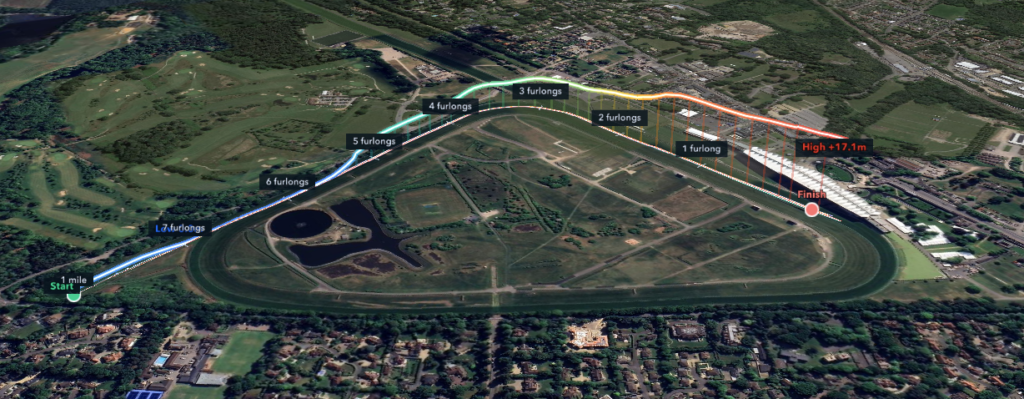
Royal Ascot Racecourse Profile
Royal Ascot is one of the most prestigious race meetings in the world. Every June, the best horses, jockeys and trainers gather for five days of elite racing, huge betting volumes and some of the most competitive contests of the entire season.
For bettors and traders, however, Royal Ascot is about much more than glamour and tradition. The shape of the racecourse, the different track configurations and the nature of the racing itself can have a significant impact on how races unfold and how betting markets behave.
Understanding the course can help explain why certain horses outperform expectations, why some races produce dramatic market moves and why Royal Ascot often creates unique trading opportunities.
Ascot Is Not Just One Racecourse
One of the most interesting features of Ascot is that it effectively contains multiple racecourses within the same venue.
During Royal Ascot, races are run on two principal tracks:
- The Straight Course
- The Round Course
The straight course stages races from five furlongs up to one mile, while the round course is used for races beyond one mile.
This distinction is important because the demands placed on horses can be completely different depending on which track they are racing on.
The Famous Straight Course
Ascot’s straight course is one of the most recognisable stretches of turf in British racing. Unlike many racecourses, there are no bends to negotiate. Horses race in a straight line from start to finish.
At first glance this might appear to make races easier to analyse, but the opposite is often true.
Large fields can spread right across the width of the track, creating separate groups of runners and sometimes producing uncertainty about which side holds the advantage.
For bettors and traders, this means draw positions and track conditions often become important talking points throughout the week.
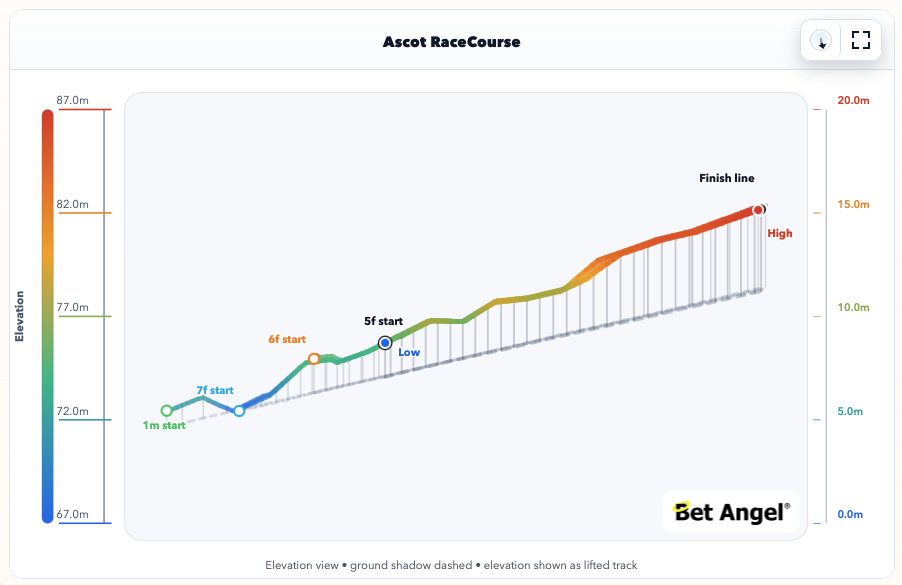
The Uphill Finish
Perhaps the most important characteristic of Ascot is the climb to the finish. The final section of the course rises steadily, making it one of the most demanding finishes in British racing.
Many horses travel strongly through the early and middle stages of a race only to weaken dramatically in the closing furlong.
This has several important implications.
Horses that rely purely on speed can struggle to sustain their effort. Strong stayers often finish much better than they appear likely to earlier in the race.
Markets can sometimes overreact to horses that appear to have the race won before the uphill finish begins to take effect.
For in running traders, Ascot regularly provides examples of horses trading at very short prices before being caught close home.
The Straight Mile
One of Ascot’s unique features is its straight mile.
Many racecourses run mile races around bends, where positioning and tactical speed can be critical. At Ascot, horses race over a full mile without turning. This often places greater emphasis on pure ability, stamina and pace distribution rather than tactical positioning.
As a result, mile races at Ascot frequently produce form that stands up particularly well when horses race elsewhere later in the season.
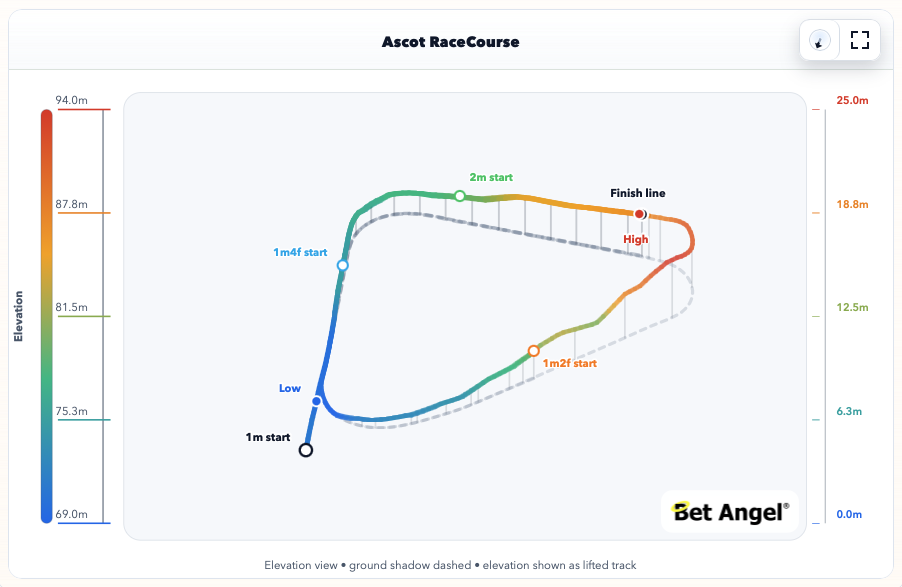
The Round Course
Races beyond one mile are run on Ascot’s round course. This introduces a completely different set of challenges.
Unlike the straight course, horses must negotiate sweeping bends and jockeys need to carefully consider their positioning throughout the race.
Covering extra ground around the bends can prove costly, particularly in strongly run races.
The round course often places greater emphasis on race tactics, pace and track position than the straight course.
For bettors, understanding likely pace scenarios can be particularly valuable in these races.
Draw Bias and Ground Conditions
Every Royal Ascot meeting generates discussion about draw bias.
Because many races feature large fields racing on the straight course, bettors naturally look for evidence that one side of the track may be favoured.
Sometimes a genuine bias develops due to:
- Rainfall
- Irrigation
- Wear on the racing surface
- Wind direction
The challenge is that conditions can change quickly during the meeting.
What appears to be a significant advantage on one day may disappear entirely the next.
Markets often react strongly to perceived draw biases, creating opportunities for traders who can distinguish between genuine evidence and random results.
Why Royal Ascot Creates Strong Betting Markets
Royal Ascot attracts enormous betting interest from around the world.
Professional traders, syndicates, bookmakers, recreational punters and international bettors all participate in the markets.
This creates exceptional liquidity, particularly on exchanges.
Large amounts of money can be matched before the off, making it easier to enter and exit positions.
However, the same liquidity can also result in very efficient pricing, meaning obvious opportunities are often quickly identified and exploited by the market.
In Running Trading at Royal Ascot
Royal Ascot can be an exciting but challenging environment for in running traders.
Several factors combine to create significant price swings:
The Uphill Finish
Horses often look like certain winners before weakening late on.
High Quality Horses
Class horses can find extra reserves under pressure, making race outcomes harder to predict.
Competitive Handicaps
Large handicaps frequently produce dramatic finishes with multiple horses challenging close to the line.
Market Psychology
Traders often react emotionally to what they see on screen, particularly when a horse appears to be travelling strongly.
At Ascot, appearances can be deceptive.
The demanding finish regularly rewards patience and stamina rather than early speed.
Conclusion
Royal Ascot is one of the greatest race meetings in the world, but it is also one of the most fascinating from a betting and trading perspective.
The combination of a demanding uphill finish, a famous straight course, a tactical round course and consistently deep fields creates a unique challenge for horses, jockeys and bettors alike.
Understanding how the track influences race dynamics can provide valuable insight when analysing races and interpreting market behaviour.
At Royal Ascot, the horse travelling best halfway through the race is not always the horse that wins. That simple fact explains many of the opportunities, and many of the mistakes, that occur during one of racing’s most important weeks.