
US Open 2026 – Shinnecock Hills
The U.S. Open returns to one of golf’s most iconic and feared venues this week as the world’s best players tackle Shinnecock Hills Golf Club for the sixth time.
Few courses in world golf have a reputation quite like Shinnecock. Set on exposed links style terrain on Long Island, it is one of the rare American courses that can feel more like a brutal Open Championship venue than a traditional parkland layout. Wind, firm fairways, severe run offs and punishing rough combine to create a relentless examination of every aspect of a golfer’s game.
For traders and bettors, Shinnecock has historically produced exactly the sort of volatility that creates opportunities.
The leaderboard can change rapidly, early leaders are far from guaranteed success, and even the best players in the world can find themselves fighting simply to make par.
A Course Built For The U.S. Open
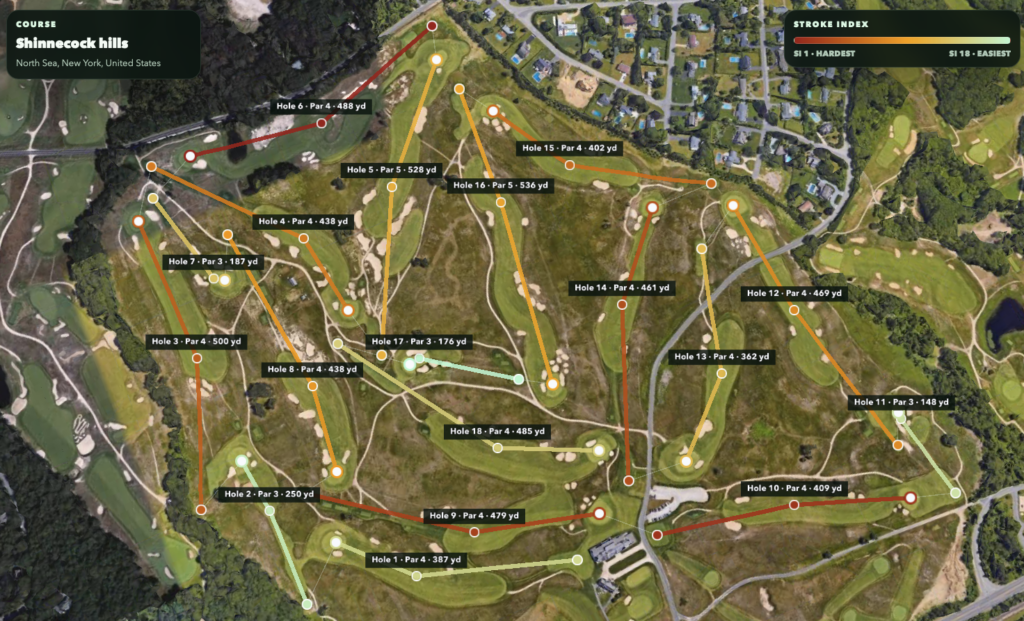
The 2026 setup measures approximately 7434 yards and plays to a par of 70.
On paper that may not sound particularly intimidating in the modern era of power golf. In reality, the scorecard tells only part of the story. The real defence of Shinnecock lies in its exposure to the elements. Unlike many modern championship venues, there are few trees to shield players from the wind. Gusts can transform relatively straightforward holes into survival tests within a matter of minutes.
The course’s undulating terrain also creates awkward lies and difficult approaches. Miss a green in the wrong place and players often face delicate recovery shots from tightly mown run off areas rather than thick rough.
The result is a venue where precision often matters more than raw power.
History Suggests Over Par Is A Good Score
One of the most striking characteristics of Shinnecock is how difficult it has played during previous U.S. Opens.
The last three editions with complete hole by hole scoring data produced average field scores more than four shots over par.
In 1995, the field averaged 73.34 on a par 70 layout.
In 2004, that figure rose to 74.66.
In 2018, players averaged 74.39.
That gives an average of roughly 4.1 shots over par across the modern sample.
For bettors and traders, this is significant because difficult courses tend to compress the field. Large deficits can disappear quickly when bogeys are common and birdies remain scarce.
Don’t Panic If Your Selection Starts Slowly
One of the most fascinating historical patterns at Shinnecock is the position of eventual winners after the opening round.
Every U.S. Open champion at Shinnecock since 1986 was at least four shots behind after Thursday.
In fact:
- Raymond Floyd was five shots behind after round one in 1986.
- Corey Pavin was six shots behind after round one in 1995.
- Retief Goosen was four shots behind after round one in 2004.
- Brooks Koepka was six shots behind after round one in 2018.
That is an extraordinary statistic. Not a single winner led after the opening round.
For exchange traders this creates an important lesson. Markets often overreact to early leaders in majors. At Shinnecock, history suggests patience can be rewarded. The eventual winner may still be lurking several shots back after 18 holes.
The Holes That Matter Most
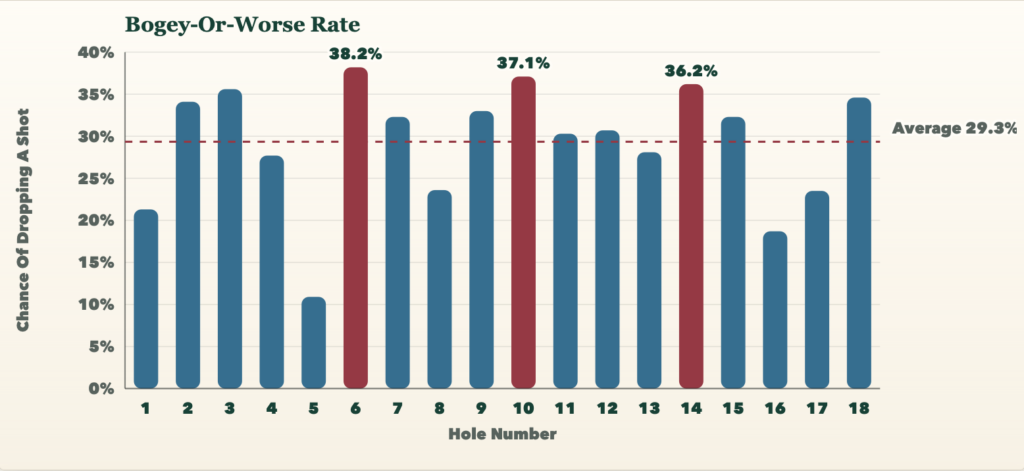
Every course has signature holes, but Shinnecock’s difficulty is spread throughout the layout.
Historically, the toughest holes have included:
Hole 6
The sixth has been the most difficult hole in the modern sample, playing nearly four tenths of a stroke over par.
Players have made bogey or worse on more than 38% of attempts.
Hole 10
The famous drivable par four tempts aggression but can punish mistakes severely.
It has produced one of the highest double bogey rates on the course and a bogey or worse percentage exceeding 37%.
Hole 14
A long demanding par four that consistently ranks among the toughest tests on the property.
More than 36% of players historically leave with bogey or worse.
Where Players Must Attack
Birdies are precious at Shinnecock. The best opportunity typically comes at the par five fifth hole. Historically it has played more than a quarter of a stroke under par and has generated birdie or better almost 40% of the time.
The par five sixteenth is also a key scoring opportunity. Players who fail to take advantage of these holes often find themselves struggling to keep pace.
Wind Changes Everything
Perhaps the biggest variable this week will be the weather.
When Shinnecock hosted the U.S. Open in 2004, Retief Goosen finished at four under par. By contrast, Brooks Koepka won in 2018 at one over par. The difference was largely driven by conditions.
A calm day can make the course manageable for elite players. A windy afternoon can turn even short approach shots into a guessing game.
This is particularly important for traders. Unlike many venues where course difficulty remains relatively stable, Shinnecock’s challenge level can change dramatically throughout the day depending on wind strength and direction.
Trading The U.S. Open At Shinnecock
From a trading perspective, Shinnecock tends to create several recurring themes.
First, avoid becoming overly attached to early leaders. History suggests they are vulnerable.
Second, expect significant intraday volatility if the wind strengthens. Conditions can vary dramatically between morning and afternoon waves.
Third, focus on players who consistently avoid big numbers. On a course where bogeys are common, preserving par often matters more than chasing birdies.
Finally, remember that major championships are frequently won through patience rather than brilliance. Shinnecock rewards discipline, strategic thinking and mental resilience.
Final Thoughts
Shinnecock Hills has hosted U.S. Opens in three different centuries and remains one of the purest tests in championship golf.
The venue rewards elite ball striking, punishes poor decision making and refuses to allow players to relax for even a moment. That combination makes it a fascinating challenge for golfers and an equally fascinating tournament for bettors and traders.
If history is any guide, don’t expect low scoring.
Expect mistakes.
Expect volatility.
And expect the eventual champion to emerge from one of the toughest examinations that professional golf has to offer.